
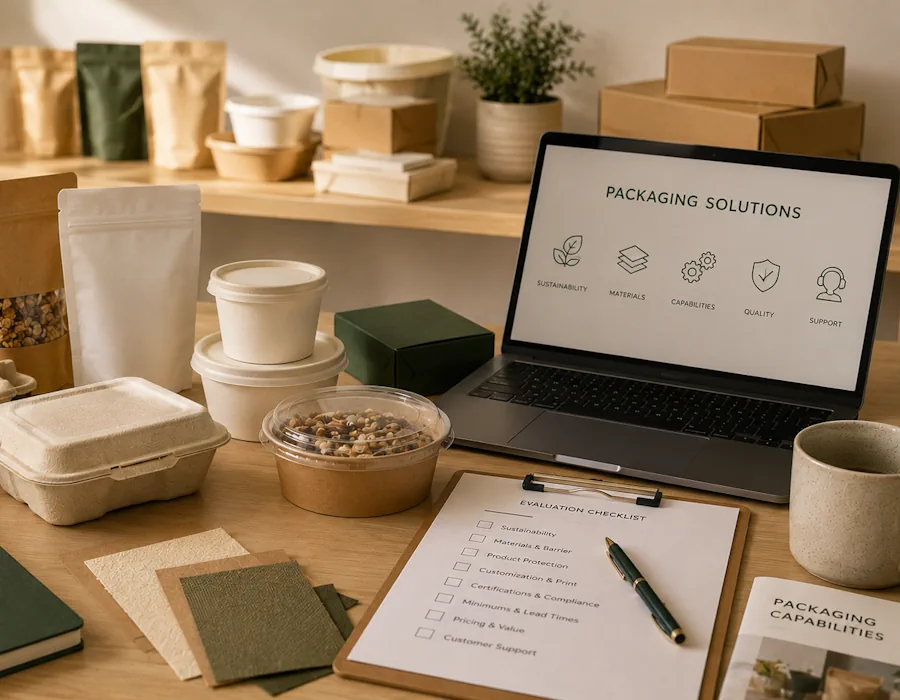
“Food packaging companies” is a broad category covering manufacturers, distributors, and design-and-print specialists, and the right type of company depends entirely on what you’re trying to source: raw materials, finished stock packaging, or a fully custom design-to-production partner. Rather than a list of specific names, which goes stale fast and varies enormously by region and product category, the more durable resource is a framework for evaluating whoever you’re actually considering.
The Three Types of Food Packaging Companies
Manufacturers produce packaging materials directly, often at scale, and typically work best for brands with volume high enough to meet their minimum order quantities, which tend to be the highest of the three categories. Distributors and wholesalers buy in bulk from manufacturers and resell in smaller quantities, generally the best starting point for early-stage brands since minimums are lower even though per-unit cost is somewhat higher, a path we cover in more detail in our food packaging supplies guide. Custom packaging companies and design-print specialists handle the full custom process, from design through production, and are the right fit once a brand needs specific branding, structure, or barrier properties that stock packaging can’t provide — see our custom food packaging guide for how that process and pricing typically works.
Many brands move through more than one of these over time — starting with a distributor while volume is uncertain, then working with a manufacturer or specialist directly once volume and requirements are clear enough to justify it.
What to Actually Check Before Choosing
A few things matter more than a company’s size or how polished their website is. Food-grade certification for the specific materials and markets you sell into should be confirmed directly, not assumed. Minimum order quantities and realistic lead times, including for reorders, need to be clear before you commit to a design. Sample and prototyping availability matters — a company unwilling to provide physical samples before a full production run is a real risk for anything touching food. References or a track record in your specific product category are worth asking about directly, since packaging expertise doesn’t transfer evenly across categories — a company strong in dry goods packaging isn’t automatically equipped for frozen or liquid products. And, for any brand selling in multiple markets, confirm the company can actually meet the regulatory requirements of each region you sell into, not just your home market.
Local vs. National vs. Overseas Companies
This is one of the more consequential tradeoffs, and it’s rarely a simple “cheaper is better” decision. Local and regional companies typically offer faster turnaround and easier communication, which matters more for smaller, more frequent orders. National companies often provide a middle ground on pricing and capability, useful once volume outgrows what a local supplier can efficiently handle. Overseas manufacturers, particularly in certain regions, can offer meaningfully lower per-unit costs at higher volumes, but freight time, duties, and communication friction need to be weighed against that savings — the true landed cost is often higher than the quoted unit price suggests once these are factored in.
Frequently Asked Questions
Should I use a local or national food packaging company?
It depends on your order volume and how much you value fast turnaround versus lower per-unit cost. Local companies generally serve smaller, more frequent orders better; national or overseas companies tend to offer better pricing at higher volumes but with longer lead times.
What should I ask a food packaging company before ordering?
At minimum, confirm food-grade certification for your specific product and markets, get clear minimum order quantities and lead times including for reorders, and request physical samples before committing to a full production run.
Is it better to work with a manufacturer or a distributor?
Distributors generally offer lower minimums and are a better fit for early-stage or lower-volume brands, while manufacturers typically require higher volume commitments but can offer more direct control over specifications and pricing at scale.
How do I find a sustainable food packaging company?
Ask directly about material certifications (compostable, recycled content, etc.) rather than relying on general marketing claims, since sustainability terminology in packaging is loosely regulated and varies significantly in what it actually guarantees — our sustainable packaging guide covers what these claims should and shouldn’t mean.