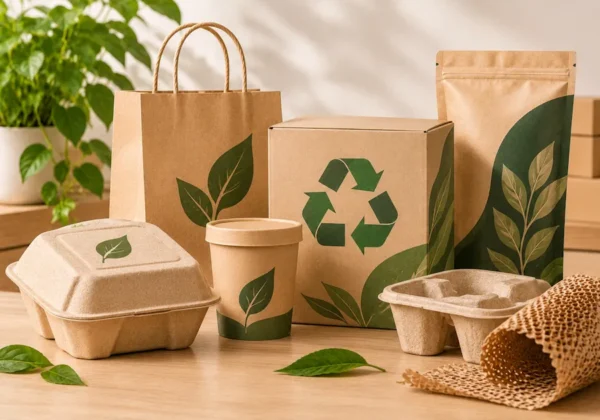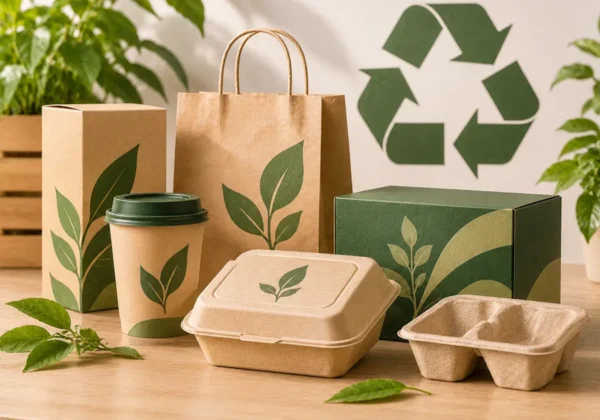

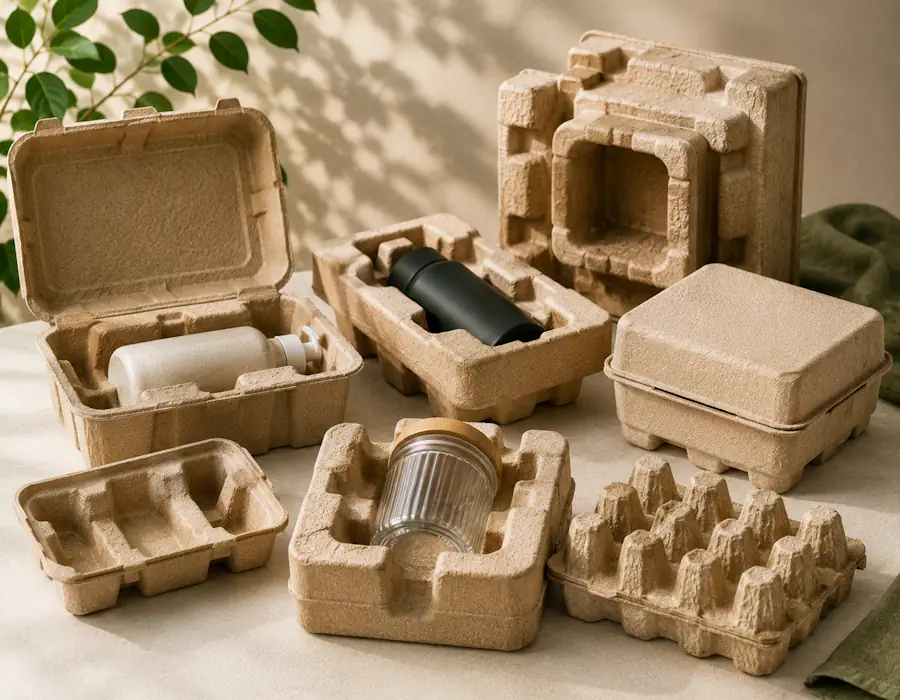
Molded pulp — also called molded fiber — is packaging made by pressing recycled paper or plant fiber into a mold, the same basic process behind the egg cartons most people already recognize, now extending into protective trays, cosmetic inserts, and food service packaging that used to default to foam or rigid plastic. It’s one of the packaging materials that’s grown fastest for a straightforward reason: it delivers real cushioning and structural protection from a material that’s both recycled and fully recyclable again afterward.
How Molded Pulp Is Made
The process starts with recycled paper, cardboard, or plant fiber broken down into a pulp slurry with water. That slurry is drawn onto a mold under vacuum, which shapes it into the desired form, then pressed and dried to remove moisture and set the final shape. This is fundamentally the same category of process used for egg cartons, just applied to increasingly specific and precise shapes as manufacturers have gotten better at molding tighter tolerances for products like electronics and cosmetics.
Because the process relies on molds, molded pulp packaging shares a real economic characteristic with other molded materials: tooling cost is fixed regardless of volume, which means it favors larger production runs and is less cost-effective for very small or highly variable orders.
Where Molded Pulp Is Replacing Foam
Molded pulp has become the most direct substitute for expanded polystyrene foam in several applications. Protective trays and inserts for electronics, appliances, and cosmetics increasingly use molded pulp instead of foam, trading some cushioning performance per unit of thickness for genuinely better recyclability and a material story that resonates with sustainability-focused brands. Food service items — trays, plates, some takeout containers — have shifted toward molded pulp partly driven by regulatory restrictions on foam in a growing number of markets. And egg and produce packaging remains molded pulp’s original and still largest application, valued for ventilation properties that solid plastic or cardboard can’t match as easily.
The tradeoff worth being direct about: molded pulp generally offers somewhat less cushioning per unit of thickness than foam, and it performs worse under moisture unless a coating is added — a real consideration for anything shipped in humid conditions or holding wet contents.
Sustainability Profile
Molded pulp’s sustainability case is genuinely strong relative to most alternatives it competes with. It’s typically made from recycled paper or cardboard, meaning it’s diverting existing waste material rather than requiring new raw input. It’s fully recyclable and, in most formulations, compostable as well, since it’s fundamentally a paper-based material without the multi-layer complications that affect film or coated packaging. And it biodegrades relatively quickly compared to foam, which can persist in the environment for a very long time.
The main caveat is moisture resistance coatings — where molded pulp is treated to hold up against moisture or grease, that coating can affect its recyclability and compostability in the same way it does for paperboard and other paper-based materials, so a specific product’s finishing matters more than the base material claim alone.
Cost Considerations
Molded pulp generally costs more per unit than foam for comparable cushioning performance, which is the main reason foam hasn’t been fully displaced despite molded pulp’s clear sustainability advantages. That cost gap has narrowed as production scale has increased and more manufacturers have entered the space, but it’s still a real factor worth weighing against the sustainability and brand-positioning benefits for any brand considering the switch.
Frequently Asked Questions
What is molded pulp packaging made of?
Molded pulp is made from recycled paper, cardboard, or plant fiber, broken down into a pulp slurry, shaped in a mold under vacuum, then pressed and dried into its final form.
Is molded pulp packaging the same as molded fiber?
Yes — the two terms describe the same material and process, with usage varying somewhat by region and industry rather than referring to genuinely different products.
Is molded pulp packaging more expensive than foam?
Generally yes, per unit of comparable cushioning performance, though the cost gap has narrowed as production has scaled, and many brands weigh the cost premium against molded pulp’s stronger sustainability profile.
Can molded pulp packaging get wet?
Uncoated molded pulp performs poorly under moisture and can lose structural integrity, which is why products needing moisture resistance typically require a coating — something worth confirming for any application involving humidity or wet contents.