

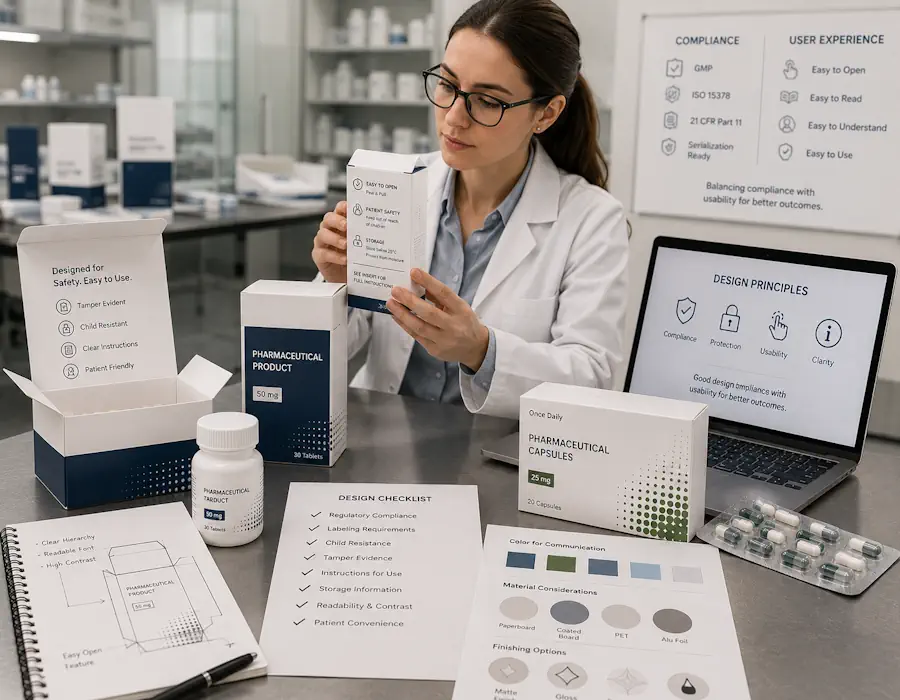
Pharmaceutical packaging design operates under constraints that don’t apply to almost any other design category: every element — from label placement to closure mechanism — has to satisfy regulatory requirements before it can satisfy usability or brand considerations. Getting the priority order backward, treating compliance as something to retrofit onto a design rather than the framework the design has to work within from the start, is the most common and costly mistake in this space.
What Makes Pharmaceutical Packaging Design Different
In most consumer categories, design comes first and compliance gets checked afterward. In pharmaceutical packaging, regulatory requirements — child-resistant closures where mandated, specific label content and placement, container-closure compatibility with the drug formulation — function as fixed constraints the design has to work within from the earliest concept stage. This isn’t a bureaucratic inconvenience layered on top of design; it fundamentally changes the design process, since a design that looks resolved but hasn’t been validated against these requirements isn’t actually finished.
The other major difference is how expensive design changes become after approval. A pharmaceutical product’s packaging is typically part of its regulatory approval, meaning a packaging change after launch can require a new regulatory filing and review, not just an updated print file. This is why pharmaceutical packaging design invests more heavily in getting things right before launch than most consumer categories, where post-launch redesigns are comparatively routine.
Designing for Patient Usability
Within those constraints, real design work still matters, particularly for patient-facing usability. Readability, especially for elderly or visually impaired patients, has to account for font size, contrast, and information hierarchy on labels that often carry more mandatory text than consumer packaging allows much room for. Dosing clarity, particularly for products taken on a schedule, benefits from thoughtful design — calendar blister packaging, for instance, uses printed day-of-week labeling specifically to reduce dosing errors, a design choice that’s also a genuine patient safety intervention. And opening mechanisms have to balance child-resistance against usability for the intended patient population, which is a harder design problem than it sounds, since a closure that’s too difficult can lead elderly patients to circumvent child-resistant features entirely, undermining the safety benefit.
Working With Pharmaceutical Packaging Design Specialists
A meaningful share of demand around this topic is specifically for design companies specializing in pharmaceutical packaging, and the reason a specialist matters more here than in most categories is that pharmaceutical design work requires genuine familiarity with the regulatory landscape, not just aesthetic skill. A designer without pharmaceutical-specific experience can produce something that looks resolved but fails validation or compliance review, which is a far more costly mistake to catch late than in consumer packaging, given how deeply packaging design is tied to regulatory approval in this category.
Frequently Asked Questions
What makes pharmaceutical packaging design different from consumer packaging design?
Regulatory requirements function as fixed design constraints from the start rather than something checked after the fact, and packaging changes after a product’s approval can require new regulatory review, making the process considerably more front-loaded than most consumer design work.
Why is readability such a big consideration in pharmaceutical packaging design?
Medications are often used by elderly or visually impaired patients, and dosing errors carry real safety consequences, so label readability is treated as a functional safety requirement rather than a purely aesthetic one.
Can pharmaceutical packaging be redesigned after a product launches?
Yes, but changes often require regulatory filing and review depending on what’s being changed, which makes pharmaceutical packaging redesigns slower and more deliberate than in most consumer categories.
Do I need a specialist for pharmaceutical packaging design?
Generally yes — pharmaceutical packaging design requires familiarity with regulatory requirements specific to the category, and a designer without that experience risks producing work that looks finished but fails compliance or validation review.