

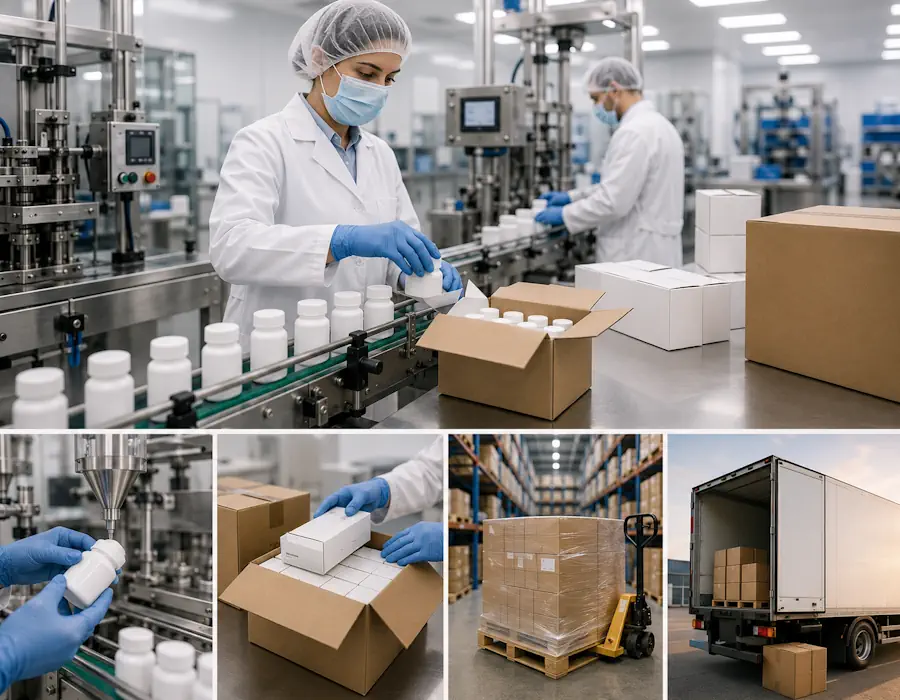
Pharmaceutical contract packaging means outsourcing the packaging step — sometimes alongside manufacturing itself — to a third-party company specializing in it, rather than building and maintaining that capability in-house. It’s a common path for smaller pharmaceutical companies, companies launching a new product without existing packaging infrastructure, or larger companies managing overflow capacity, and the appeal comes down to avoiding the capital and validation burden of building pharmaceutical-grade packaging capability from scratch.
Why Companies Use Contract Packaging
Building in-house pharmaceutical packaging capability requires significant capital investment in validated equipment and facilities, plus the specialized staff to operate and maintain regulatory compliance — a real barrier for smaller companies or products with uncertain or lower initial volume. Contract packagers, sometimes called CPOs (contract packaging organizations), have already made that investment and spread its cost across multiple clients, which is what makes outsourcing economically sensible below a certain volume threshold. This isn’t unique to pharmaceuticals — contract packaging exists across food, cosmetics, and other industries for similar reasons — but the stakes and regulatory requirements are meaningfully higher in pharmaceuticals specifically, since a contract packager for drug products has to maintain the same validation and compliance standards an in-house facility would.
What Pharmaceutical Contract Packagers Actually Do
Services generally span more than just the physical packaging step. Primary and secondary packaging execution, meaning the actual blister packing, bottling, or cartoning process, is the core service, performed on validated equipment specific to the product’s regulatory requirements — for sourcing the materials and components used in that process directly, rather than the packaging labor itself, see our pharmaceutical packaging suppliers guide. Labeling and serialization, applying required regulatory information and increasingly track-and-trace codes, is typically bundled into the packaging service rather than handled separately. Quality control and release testing confirms the packaged product meets specifications before it moves further into distribution. And regulatory documentation support helps the client company maintain the compliance records regulatory bodies require, since the contract packager’s processes have to integrate into the client’s overall regulatory filing, not operate independently of it.
Evaluating a Pharmaceutical Contract Packaging Company
The standards here are higher than for choosing a general packaging supplier. Regulatory compliance history and current certifications need direct verification, not just a claim on a company’s website, since your product’s regulatory standing depends on your contract packager’s compliance. Experience with your specific product category matters significantly — a contract packager strong in solid oral dose packaging isn’t automatically equally capable with injectables or specialized delivery formats, given how different the validation and equipment requirements are between these categories. Capacity and flexibility, meaning whether a packager can scale with your volume needs and accommodate product changes without excessive lead time, affects how well the relationship works as your needs evolve. And audit rights and transparency, since regulatory bodies may expect visibility into your contract packager’s processes as part of your own compliance obligations, are worth confirming as part of any agreement.
Frequently Asked Questions
What is pharmaceutical contract packaging?
It’s the practice of outsourcing the packaging of pharmaceutical products to a third-party company specializing in validated, compliant packaging processes, rather than building that capability in-house.
Why would a pharmaceutical company use contract packaging instead of doing it in-house?
Building compliant, validated packaging capability requires significant capital and specialized staff, which often isn’t justified for smaller companies, newer products with uncertain volume, or companies managing overflow beyond their own capacity.
What should I look for in a pharmaceutical contract packaging company?
Verified regulatory compliance history, direct experience with your specific product category, sufficient capacity and flexibility for your volume needs, and transparency around processes that may need to be visible for your own regulatory compliance.
Is contract packaging only used in pharmaceuticals?
No — contract packaging is common across food, cosmetics, and other industries as well, though pharmaceutical contract packaging carries meaningfully higher regulatory and validation requirements than most other categories.