

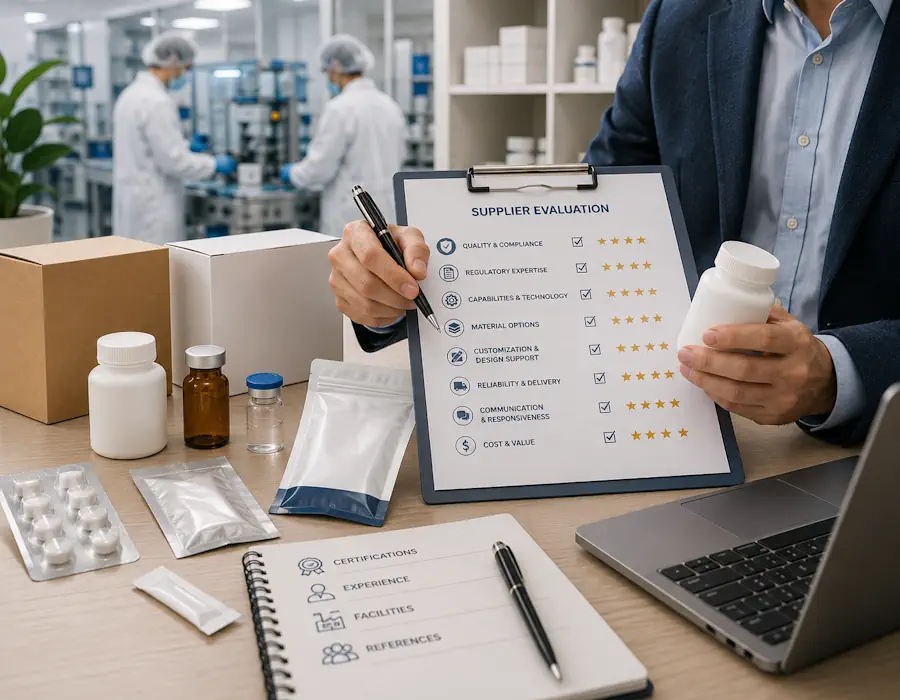
Sourcing pharmaceutical packaging materials and components — vials, blister film, closures, cartons — is a different evaluation than contract packaging, which handles the packaging process itself. This page covers choosing suppliers and manufacturers for the actual materials and components a pharmaceutical company or its contract packager will use, where the evaluation standards run considerably higher than for sourcing packaging in most other industries.
Why Pharmaceutical Packaging Sourcing Is Different
Every material choice in this category has to satisfy container-closure compatibility requirements, meaning it’s been tested and validated for compatibility with the specific drug formulation it will hold — a supplier’s material isn’t a drop-in option just because it’s technically food-grade or generally suitable for other packaging applications. Documentation and traceability requirements are also considerably heavier: pharmaceutical packaging suppliers need to provide certificates of analysis, material traceability records, and often documentation supporting your own regulatory filings, not just a product spec sheet. And change control matters more here than in most sourcing relationships, since a supplier changing their material formulation or manufacturing process without notice can invalidate your existing regulatory approval, which is why formal change notification agreements are standard practice in pharmaceutical packaging supply relationships.
What to Verify Before Choosing a Supplier
A few checks matter more here than general reputation or price. Regulatory compliance documentation, including relevant certifications and a track record with the regulatory bodies governing your specific markets, should be verified directly rather than assumed from a supplier’s general standing in the industry. Material compatibility data for your specific drug formulation, not just general suitability claims, needs to be confirmed, since compatibility genuinely varies by formulation even within similar product categories. Change control and notification practices, meaning how and when a supplier will inform you of any change to materials or processes, should be a formal part of any agreement given the regulatory stakes involved. And capacity and supply chain resilience, particularly for critical or single-source materials, is worth evaluating directly, since a supply disruption for a validated packaging component can be considerably harder to resolve quickly than switching a general packaging supplier in most other industries.
Manufacturers vs. Distributors in Pharmaceutical Packaging
This distinction carries more weight in pharmaceutical sourcing than in many other categories. Manufacturers produce the actual packaging materials and components, and working directly with them typically offers the most direct access to compatibility and compliance documentation, though often at higher minimum order requirements. Distributors and specialized pharmaceutical packaging suppliers aggregate products from multiple manufacturers and can offer more flexibility on order size and faster access to a range of options, though verifying that documentation and traceability flow through accurately from the original manufacturer is an important part of working with a distributor in this category specifically.
Frequently Asked Questions
What's the difference between a pharmaceutical packaging supplier and a contract packager?
A packaging supplier provides the materials and components — vials, blister film, closures — while a contract packager performs the actual packaging process using those materials, sometimes sourcing them directly and sometimes working with materials the client provides.
Why does pharmaceutical packaging sourcing require more documentation than other industries?
Because packaging materials have to be validated for compatibility with a specific drug formulation and are tied to a product’s regulatory approval, suppliers need to provide documentation supporting both compatibility and traceability, not just general product specifications.
Should I buy pharmaceutical packaging materials directly from a manufacturer or through a distributor?
It depends on your volume and need for direct compatibility documentation — manufacturers typically offer more direct access to compliance data at higher minimums, while distributors offer more flexibility, provided documentation traceability from the original manufacturer is confirmed.
What happens if my packaging supplier changes their material without telling me?
This can invalidate your existing regulatory approval for that packaging, which is why formal change notification agreements are standard practice in pharmaceutical packaging supply relationships, distinct from most other sourcing categories.