

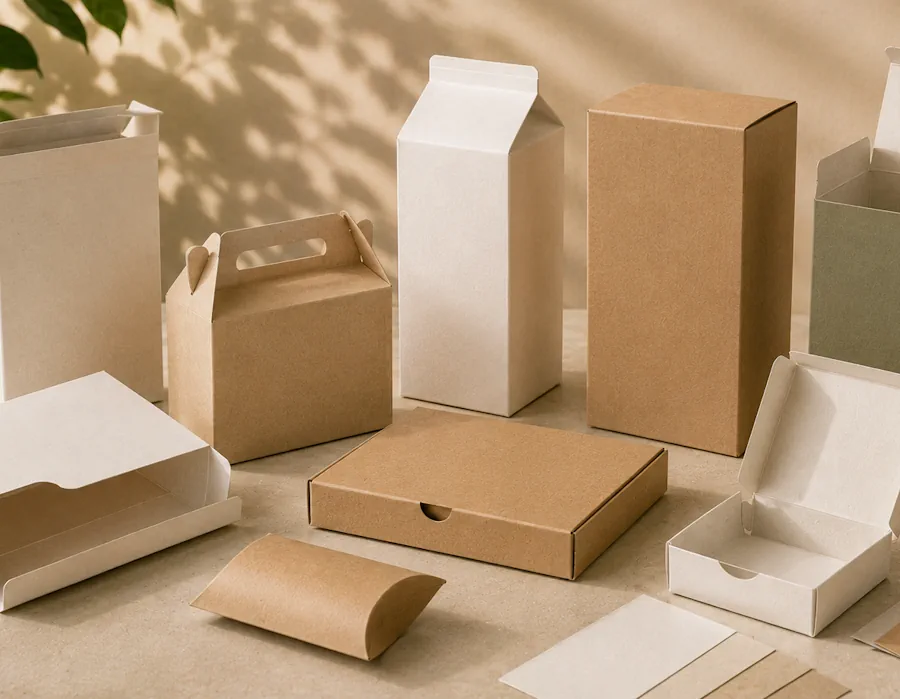
Paperboard is the flat, dense paper-based material behind most printed retail cartons — cereal boxes, cosmetic boxes, pharmaceutical cartons — distinct from corrugated cardboard, which has a fluted structural layer paperboard lacks. It’s one of the paper-based packaging materials, and that structural difference from corrugated is the whole story: paperboard trades stacking and impact strength for a smoother, more printable surface, which is exactly the tradeoff most secondary retail packaging is built around.
What Makes Paperboard Different From Corrugated
Paperboard is a single, dense sheet of compressed paper fiber, thicker and stiffer than standard printing paper but without the fluted middle layer that gives corrugated cardboard its stacking strength. This makes paperboard structurally weaker than corrugated at the same thickness, but it also makes paperboard considerably better suited to fine print detail and a clean, finished visual surface — which is exactly why retail cartons use paperboard while shipping boxes use corrugated. The two materials are solving different problems: paperboard for shelf presentation and branding, corrugated for surviving transit.
Common Paperboard Grades
Solid bleached sulfate (SBS) is the highest-quality, brightest white paperboard grade, favored for premium packaging like cosmetics and pharmaceuticals where print quality and a clean finish matter most. Coated unbleached kraft (CUK) offers strong structural performance at a lower cost than SBS, often used where some of the premium finish can be traded for cost efficiency. Recycled paperboard, made largely or entirely from recycled fiber, costs less than virgin paperboard grades and has grown significantly as a lower-impact option, though it generally can’t match virgin paperboard’s brightness and fine print detail.
Paperboard for Food Packaging
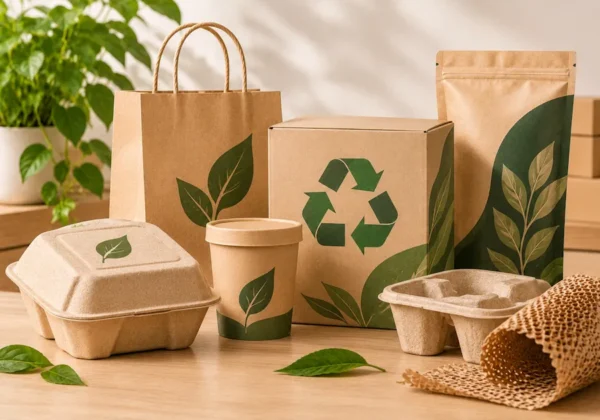
Paperboard shows up extensively in food packaging specifically — cereal boxes, frozen food cartons, and takeout containers are common applications. For food contact, paperboard typically needs a coating or liner to provide moisture resistance, since uncoated paperboard alone offers minimal barrier protection against grease or moisture. This coating requirement is also where sustainability considerations get more complicated: a plastic-based moisture coating can significantly reduce a paperboard package’s recyclability, which is why compostable and more easily recyclable coating alternatives have become an active area of development in food packaging specifically.
Cost and Sustainability
Paperboard is generally less expensive than corrugated cardboard per unit of material, largely because it doesn’t require the fluting process, though this comparison only holds when comparing paperboard to corrugated for jobs paperboard is actually suited to — a direct cost comparison isn’t meaningful for applications requiring corrugated’s structural strength. On sustainability, paperboard is widely recyclable in its uncoated form and often made from a meaningful share of recycled content already, though as with food-contact coatings, the specific finishing applied to a paperboard package matters more to its actual recyclability than the base material claim alone.
Frequently Asked Questions
What is paperboard packaging used for?
Paperboard is mainly used for retail cartons — cereal boxes, cosmetic packaging, pharmaceutical cartons, and similar products where print quality and shelf presentation matter more than heavy structural strength.
Is paperboard the same as cardboard?
Not exactly — paperboard is a flat, single-layer sheet, while what’s commonly called “cardboard” often refers to corrugated board, which has a fluted structural layer paperboard doesn’t have.
Is paperboard packaging recyclable?
Generally yes in its uncoated form, though coatings added for moisture resistance, common in food packaging, can reduce recyclability depending on the specific coating material used.
Why is paperboard used instead of corrugated for retail boxes?
Paperboard offers a smoother, more printable surface and lower cost for products that don’t need to survive shipping and handling on their own, since they’re typically protected inside a stronger secondary or tertiary layer.


1 Comment