
Frequently Asked Questions
What is the best food packaging solution? There isn’t a universal answer — the right solution depends entirely on what’s threatening your specific product’s shelf life: oxygen, moisture, light, temperature, or physical damage. Identifying the dominant risk is the first step, not browsing packaging formats.
What’s the difference between a food packaging “solution” and a food packaging “material”? Material refers to the substance itself, like plastic film, glass, or paperboard. Solution refers to the complete system — material, structure, and barrier design — assembled to solve a specific product’s preservation problem.
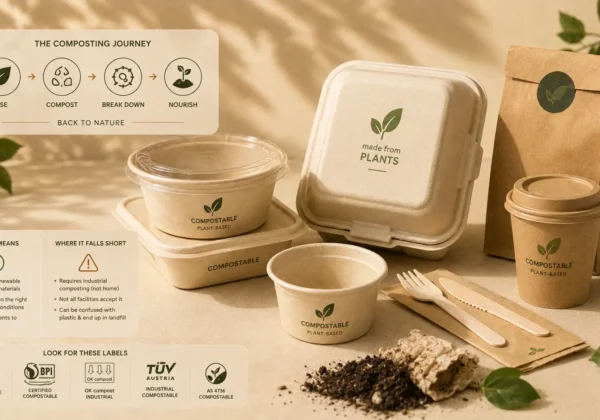
Are sustainable food packaging solutions as effective as conventional ones? It depends on the specific material and product. Some compostable and plant-based options now match conventional barrier performance; others still trade off shelf life for lower environmental impact. This is worth verifying with real barrier data for your specific product rather than assuming either direction.
Do frozen and fresh food need different packaging solutions? Yes — frozen food packaging prioritizes moisture barrier and cold-temperature flexibility, while fresh food packaging often needs controlled breathability rather than a total seal, since some fresh products spoil faster when moisture is fully trapped.
Frequently Asked Questions
What is the best food packaging solution?
There isn’t a universal answer — the right solution depends entirely on what’s threatening your specific product’s shelf life: oxygen, moisture, light, temperature, or physical damage. Identifying the dominant risk is the first step, not browsing packaging formats.
What's the difference between a food packaging solution and a food packaging material?
Material refers to the substance itself, like plastic film, glass, or paperboard. Solution refers to the complete system — material, structure, and barrier design — assembled to solve a specific product’s preservation problem.
Are sustainable food packaging solutions as effective as conventional ones?
It depends on the specific material and product. Some compostable and plant-based options now match conventional barrier performance; others still trade off shelf life for lower environmental impact. This is worth verifying with real barrier data for your specific product rather than assuming either direction.
Do frozen and fresh food need different packaging solutions?
Yes — frozen food packaging prioritizes moisture barrier and cold-temperature flexibility, while fresh food packaging often needs controlled breathability rather than a total seal, since some fresh products spoil faster when moisture is fully trapped.