
Candy and confectionery packaging has a different job than most other food packaging: barrier protection matters less here than in almost any other food category, since most candy is shelf-stable and low-moisture to begin with, while shelf appeal and unwrapping experience matter more. That shift in priorities is why candy packaging search demand skews so heavily commercial — people searching this term are usually evaluating custom options and suppliers, not researching food science.
What Candy Packaging Actually Needs to Do
Unlike frozen or fresh food, most candy and chocolate products don’t need heavy barrier protection — the bigger risks are moisture (softening, blooming in chocolate), light (fading color, degrading flavor in some formulations), and physical damage in shipping, not spoilage in the food-safety sense. That’s part of why candy packaging design gets so much more creative latitude than, say, meat packaging: the material constraints are simply lighter.
The exception is chocolate specifically, which is genuinely more temperature-sensitive than most candy — it melts and “blooms,” developing a whitish surface film, under heat and humidity swings. Chocolate packaging often needs better thermal and moisture protection than a hard candy or gummy product would.
Common Candy Packaging Materials and Formats
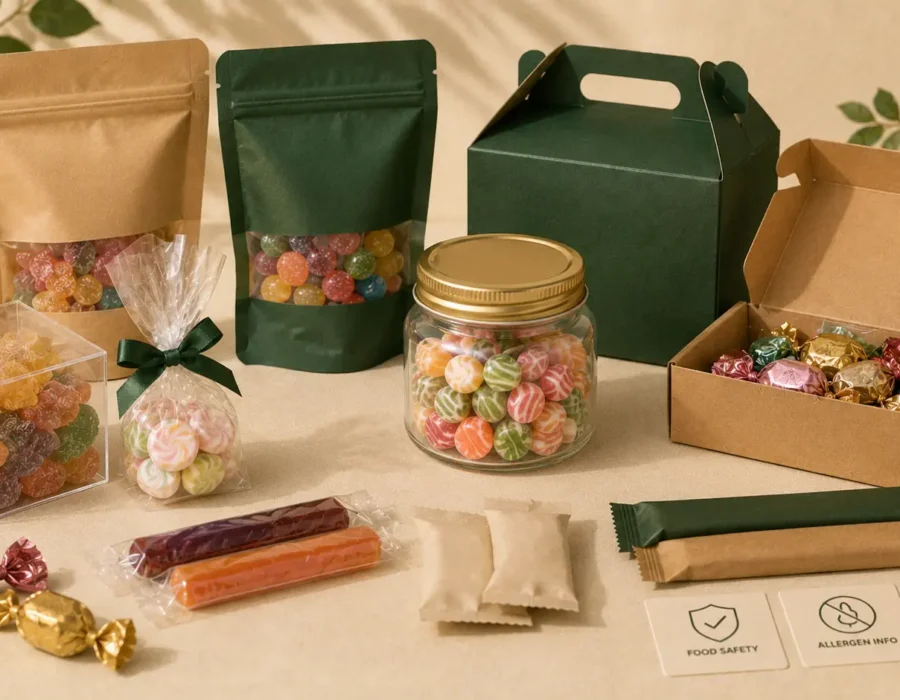
Flow wrap film is the standard for individually wrapped candy bars and pieces, fast to produce and low in material cost. Stand-up pouches are common for gummies and multi-piece bagged candy, often with resealable closures. Rigid boxes are used for chocolate and premium confectionery where unboxing experience matters. Foil wrap is still common for individual chocolate pieces, valued for its light and moisture barrier as well as its premium feel. Our packaging materials guide covers the underlying properties behind each of these options.
Custom vs. Wholesale Candy Packaging
The buying decision here mirrors most food packaging categories: wholesale or stock packaging (plain bags, generic boxes) is faster and cheaper at low volume, while custom packaging — printed branding, specific dimensions, unique structures — requires higher minimum order quantities but is where most confectionery brands differentiate, since candy is a highly visual, impulse-driven purchase category. Custom candy and chocolate packaging typically involves more design iteration than other food categories precisely because the packaging is doing more of the selling, a process our packaging design guide walks through in general terms, and sourcing specifics are covered in our food packaging supplies guide.
Candy Packaging Design Considerations
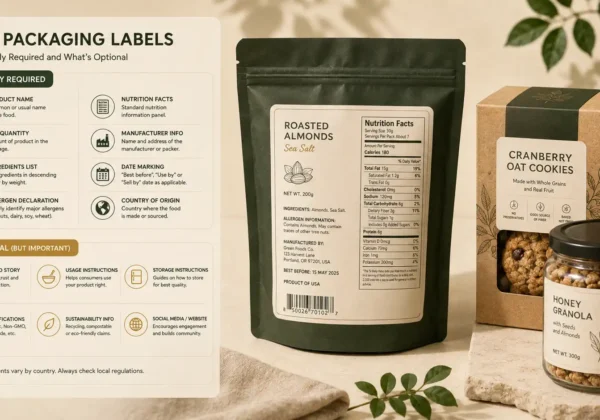
A few things separate strong candy packaging design from generic wrapping. Shelf and impulse visibility matters more here than in most food categories, since candy is disproportionately an impulse purchase. Portion and resealability are increasingly important as multi-piece bags need resealable closures for consumers buying larger formats and consuming over multiple sittings. And allergen and nutrition labeling is still legally required regardless of how playful the design is.
Frequently Asked Questions
What material is best for candy packaging?
It depends on the product — flow wrap film works well for individually wrapped pieces, stand-up pouches for multi-piece bagged candy, and rigid boxes for premium or gift-oriented chocolate. Chocolate specifically benefits from stronger moisture and temperature protection than most hard candy.
How much does custom candy packaging cost?
Cost varies significantly by format, print complexity, and order volume, but custom packaging generally requires a meaningful minimum order quantity to be cost-effective — small first orders often make more sense with stock or wholesale options while a brand is still validating a product.
Does candy packaging need to be food-grade certified?
Yes — any material in direct contact with candy or chocolate needs to meet the same food-contact safety requirements as any other food packaging, regardless of how decorative the outer design is.
Why does chocolate packaging need different materials than other candy?
Chocolate is more sensitive to temperature and humidity than most confectionery — poor packaging can cause visible bloom (a whitish film) or texture changes that hard candy and gummies aren’t as prone to.