
Flexible packaging is any package that doesn’t hold its shape on its own — pouches, bags, films, and wraps that conform to whatever they’re holding, as opposed to rigid packaging like bottles or tubs that maintain a fixed form. It’s one of the major packaging material categories, and it’s grown faster than almost any other over the last decade, largely because it solves a problem rigid packaging structurally can’t: delivering strong barrier protection using dramatically less material per unit.
Why Flexible Packaging Has Grown So Fast
The core advantage comes down to material efficiency. A flexible pouch holding the same volume as a rigid bottle typically uses a fraction of the material by weight, which cuts both raw material cost and shipping weight — and shipping weight increasingly matters as freight costs have become a larger share of total landed cost for many products. This is why flexible packaging has displaced rigid formats fastest in categories where shipping cost and shelf space efficiency matter most, from snack foods to personal care products sold direct-to-consumer.
The tradeoff is structural: flexible packaging generally offers less physical protection against crushing or puncture than rigid alternatives, and it doesn’t stand upright as reliably on a shelf without added structure like a stand-up pouch base.
Common Flexible Packaging Formats
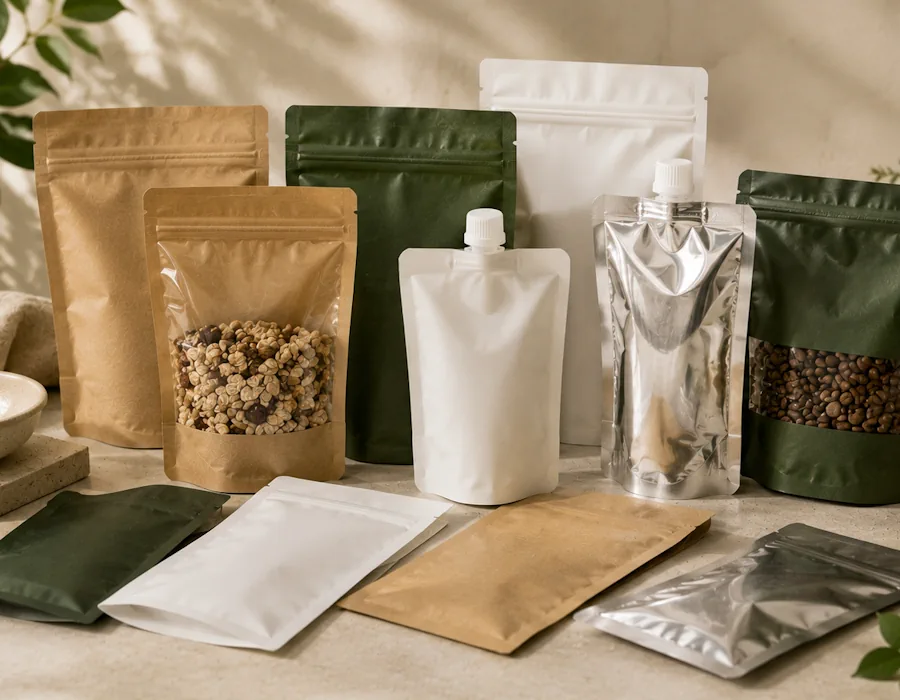
Stand-up pouches are the most recognizable modern flexible format, with a flat base that lets them stand upright on a shelf, often with a zipper or other resealable closure. Flat pouches and sachets are simpler and cheaper to produce, common for single-serve or lower-cost products where standing upright isn’t necessary. Shrink film wraps tightly around a product or group of products, commonly used for multipacks and at the tertiary packaging level for pallets. Roll stock film, fed into form-fill-seal equipment that shapes, fills, and seals a package in one continuous process, is the backbone of high-volume flexible packaging production for snacks, coffee, and similar products.
Material Structure and Barrier Performance
What makes flexible packaging capable of matching or exceeding rigid packaging’s barrier performance, despite using far less material, is layering. A typical flexible packaging structure combines multiple thin layers, each contributing a specific property — one layer for oxygen barrier, another for moisture resistance, another for seal strength or printability — laminated together into a single film. This is genuinely effective at delivering performance, but it’s also the source of flexible packaging’s biggest sustainability challenge: separating those layers for recycling isn’t practical at municipal recycling scale, which is why multi-layer flexible film remains one of the harder packaging materials to recycle through standard systems.
The industry’s response has been a real push toward mono-material structures — films built from a single plastic type engineered to deliver comparable barrier performance without the multi-layer lamination, making them meaningfully easier to recycle. This shift is still in progress rather than fully solved; mono-material film generally costs more and, in some applications, doesn’t yet fully match multi-layer performance, though the gap has narrowed considerably in recent years.
Where Flexible Packaging Is Used
Food is the largest application by far — snacks, coffee, frozen food, and pet food all rely heavily on flexible film, largely because these categories benefit disproportionately from strong barrier protection at low weight. Personal care and cosmetics increasingly use flexible pouches for refills and travel formats, trading some of the premium feel of rigid packaging for lower cost and shipping weight. Pharmaceutical and medical products use flexible packaging for items like IV bags and certain blister pack components, where flexibility is functionally necessary rather than a cost choice.
Frequently Asked Questions
What is the difference between flexible and rigid packaging?
Flexible packaging conforms to its contents and doesn’t hold a fixed shape on its own — pouches, bags, films. Rigid packaging maintains a fixed structure independent of what’s inside, like bottles, jars, or tubs.
Is flexible packaging recyclable?
It depends on the structure — mono-material flexible film is increasingly recyclable through expanding collection programs, while multi-layer film combining different plastic types is generally much harder to recycle through standard municipal systems.
Why is flexible packaging used so much for food?
Food products often need strong barrier protection against oxygen, moisture, and light, and flexible packaging delivers that protection using significantly less material and weight than rigid alternatives, which also lowers shipping cost.
What is a stand-up pouch?
A stand-up pouch is a flexible packaging format with a flat base that allows it to stand upright on a shelf without external support, often combined with a resealable zipper closure.