

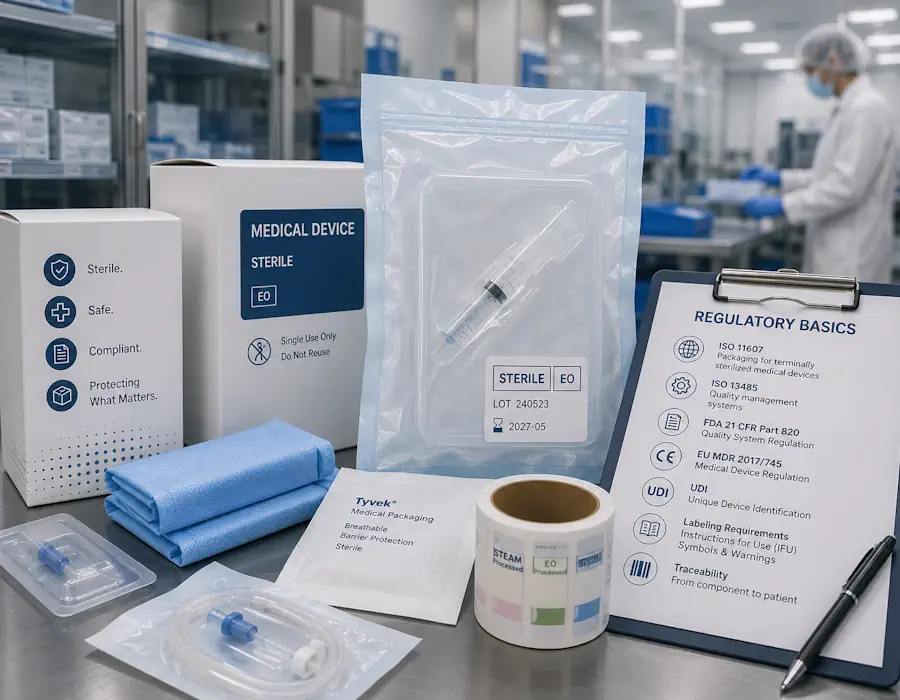
Medical device packaging shares some ground with pharmaceutical packaging — heavy regulation, patient safety consequences, validation requirements — but it has its own distinct core problem: maintaining sterility for devices that need to remain sterile until the moment they’re used, sometimes months or years after packaging. That requirement shapes materials and design choices that don’t have a direct equivalent in most drug packaging.
The Sterile Barrier System
At the center of medical device packaging is the sterile barrier system — the packaging configuration specifically responsible for maintaining sterility until the package is opened. This isn’t the same as general product protection; a sterile barrier has to prevent microbial penetration specifically, which is a narrower and more rigorously tested requirement than moisture or oxygen barrier performance alone. Tyvek, a spun-bonded polyethylene material, is common as a sterile barrier lid material specifically because it allows sterilization gas to pass through during processing (for gas-based sterilization methods) while still blocking microbial penetration once sealed — a combination that’s difficult to achieve with standard films.
Validating a sterile barrier system involves testing seal strength, seal integrity, and microbial barrier performance, and this testing has to be repeated if the packaging design, material, or sterilization method changes, similar in spirit to the validation requirements covered in pharmaceutical packaging.
Medical Device Packaging Standards and Regulations
This category operates under specific international standards that don’t have a close equivalent in most consumer packaging. ISO 11607 is the primary standard governing packaging for terminally sterilized medical devices, covering both the materials and the validation process required to demonstrate sterile barrier performance. Regulatory requirements beyond this standard vary by market and device classification, with higher-risk devices generally facing more stringent packaging validation requirements than lower-risk ones. Labeling requirements for medical devices also tend to be more extensive than typical consumer packaging, often including specific symbols, sterilization method indicators, and expiration or “use by” dating tied to sterility maintenance rather than product freshness in the food-packaging sense.
Common Medical Packaging Materials and Formats
Pouches, often a Tyvek lid sealed to a plastic or foil base, are the most common format for smaller sterile devices like needles, catheters, and surgical instruments. Trays, typically rigid thermoformed plastic with a Tyvek or film lid, are used for larger or more complex devices, sometimes holding multiple components in a fixed configuration for surgical kits. Bags, similar in concept to pouches but generally larger, are used for bulkier sterile items. Material choice throughout prioritizes compatibility with the specific sterilization method used — ethylene oxide, gamma radiation, and steam each interact differently with packaging materials, and a material suited to one method may degrade or fail with another.
Sustainability in Medical Packaging
Sustainability efforts in medical packaging face a similar constraint to pharmaceutical packaging: any material change affecting a validated sterile barrier system requires revalidation, which slows the pace of change considerably compared to consumer packaging categories. Real progress is happening nonetheless, particularly around reducing secondary packaging material and exploring more recyclable sterile barrier materials, though the sterile barrier layer itself remains the hardest part of the system to change without triggering a full revalidation cycle.
Frequently Asked Questions
What is a sterile barrier system in medical packaging?
It’s the specific packaging configuration responsible for maintaining a device’s sterility until the package is opened, tested and validated separately from general product protection since it has to prevent microbial penetration specifically.
Why is Tyvek used in medical packaging?
Tyvek allows sterilization gas to pass through during processing while still blocking microbial penetration once sealed, making it well suited as a sterile barrier lid material for devices sterilized with gas-based methods.
What standard governs medical device packaging?
ISO 11607 is the primary international standard for packaging terminally sterilized medical devices, covering both material requirements and the validation process needed to demonstrate sterile barrier performance.
Does medical device packaging need to be sterilization-method specific?
Yes — materials interact differently with different sterilization methods like ethylene oxide, gamma radiation, and steam, so packaging needs to be validated for the specific method actually used, not assumed to work universally across methods.