

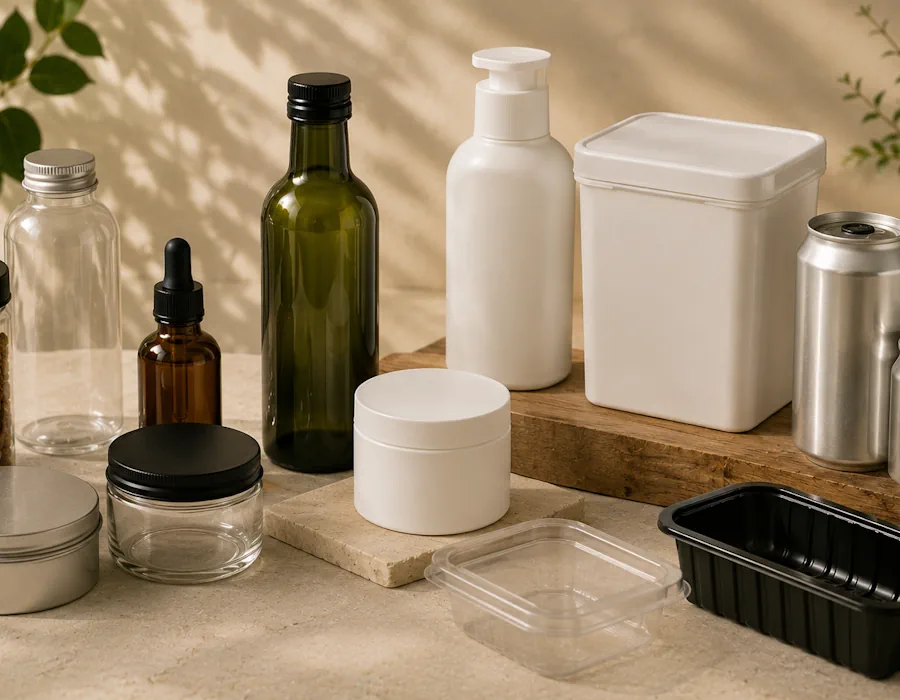
Rigid packaging holds its shape independently of what’s inside it — bottles, jars, tubs, rigid boxes, and clamshells all fall into this category, as opposed to flexible packaging, which conforms to its contents. That structural independence is rigid packaging’s core advantage, and it’s one of the major packaging material categories for exactly this reason: it protects against crushing and impact in a way flexible packaging generally can’t, which is why it remains the default for products where physical protection matters more than shipping weight.
What Makes Packaging “Rigid”
The defining test is simple: does the empty package hold its shape on its own? A rigid plastic bottle stays a bottle whether it’s full or empty; an empty flexible pouch collapses flat. This isn’t just a semantic distinction — it drives real material and manufacturing differences. Rigid packaging is typically produced through molding processes (injection molding, blow molding, thermoforming) that require more upfront tooling investment than the roll-fed processes used for flexible film, which is part of why rigid packaging generally carries higher minimum order quantities and setup costs for custom designs.
Common Rigid Packaging Materials and Formats
Rigid plastic — HDPE, PET, PP among the most common resins — dominates bottles, tubs, and jars across food, personal care, and household products, valued for being lightweight relative to glass while still holding a fixed shape. Glass, though heavier, remains standard wherever chemical inertness or a premium feel matters more than weight, common in spirits, certain pharmaceuticals, and premium cosmetics. Rigid boxes, often paperboard-based with a sturdier wall than a standard folding carton, are common in luxury and gift packaging, where the box itself signals product quality before it’s even opened. Clamshells, typically thermoformed rigid plastic, are used where a product needs to be visible through the packaging while still getting real physical protection, common in electronics and some produce.
Rigid vs. Flexible Packaging
The two categories solve different problems, and the choice usually comes down to what matters more for a specific product: physical protection or weight and material efficiency. Rigid packaging generally offers stronger impact and crush resistance, holds a more premium shelf presence, and doesn’t require additional structure to stand upright — advantages that matter most for fragile, high-value, or shelf-presentation-driven products. Flexible packaging uses significantly less material for comparable barrier protection, weighs less, and is generally cheaper per unit at scale, advantages that matter most where shipping cost and material efficiency are the bigger priority.
Many brands actually use both — a rigid outer container with a flexible pouch insert, for instance — rather than treating it as a strict either-or choice.
Custom Rigid Packaging
Custom rigid packaging carries a real cost premium over custom flexible packaging, largely due to tooling. A custom mold for an injection-molded bottle or a custom die for a rigid box represents a meaningful upfront investment that only makes financial sense once order volume is high enough to spread that cost across enough units. This is why rigid packaging redesigns happen less frequently than flexible packaging redesigns in most companies — the cost of changing tooling is a real deterrent that doesn’t exist to the same degree with printed film.
Frequently Asked Questions
What is an example of rigid packaging?
A plastic shampoo bottle, a glass jar, a rigid gift box, and a plastic clamshell are all examples of rigid packaging — each holds its shape independent of its contents.
Is rigid packaging more expensive than flexible packaging?
Generally yes, particularly for custom designs, since rigid packaging requires molds or dies that represent significant upfront tooling cost, whereas flexible packaging is typically produced from roll-fed film without the same tooling investment.
What's the difference between rigid and flexible packaging?
Rigid packaging holds its shape independently and offers stronger physical protection, while flexible packaging conforms to its contents and uses significantly less material for comparable barrier protection, at some cost to crush and impact resistance.
Why is rigid packaging used for luxury products?
Rigid packaging generally conveys a stronger sense of quality and permanence than flexible alternatives, and its structural weight and solidity are often used deliberately as a signal of product value in premium and gift categories.