
Bakery packaging solves a different problem than most other food categories. Bread and pastries aren’t shelf-stable in the way canned or dry goods are, but they also aren’t as barrier-dependent as frozen food — most bakery products are meant to be sold and eaten within days, which changes what the packaging actually needs to do.
The Core Tradeoff: Moisture vs. Mold
Bakery packaging sits on a genuine tension that doesn’t show up the same way in other food categories: trap too much moisture and you accelerate mold growth; let too much escape and the product goes stale and dries out faster. Unlike frozen food, where the goal is simply maximum barrier protection, bakery packaging often needs some controlled airflow rather than a total seal.
This is why paper bags remain common for bread despite offering far less barrier protection than plastic — for short shelf-life products sold within a day or two, allowing some moisture to escape can matter more than sealing it in. Longer-shelf-life packaged bread, by contrast, uses plastic specifically because a longer intended shelf life shifts the priority toward moisture retention and mold prevention.
Common Bakery Packaging Materials
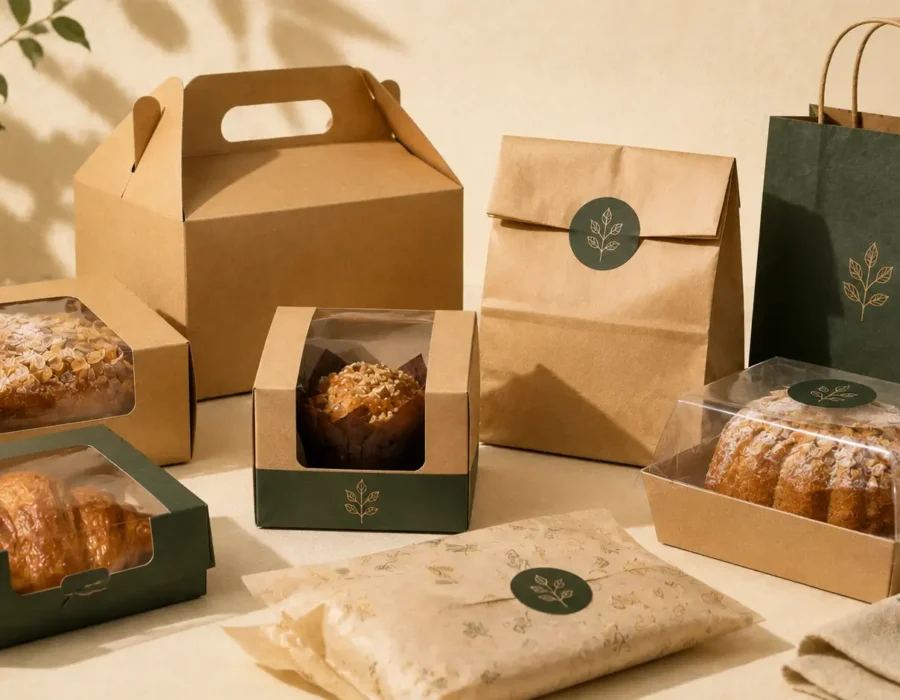
Paper bags are standard for bread and pastries with short expected shelf life — breathable and low-cost, but offering minimal barrier protection. Plastic bags are used where longer shelf life is needed, offering better moisture retention, often with a twist-tie or clip closure rather than a full heat seal. Clamshells and rigid containers are common for delicate pastries and baked goods needing physical protection from crushing, not just moisture control. Bakery boxes, often with a window, are standard for retail and bakery-counter sale, balancing physical protection with visual presentation. Molded pulp trays are increasingly used inside boxes to hold delicate items like pastries in place during transport. Our packaging materials guide covers the underlying tradeoffs behind each of these.
Custom vs. Wholesale Bakery Packaging
As with most food packaging categories, the practical choice comes down to volume and how much control a bakery needs over branding. Wholesale or bulk bakery packaging, meaning plain bags and generic boxes, works well for bakeries selling primarily in-store or through a small number of channels, while custom packaging — printed boxes, branded bags — becomes worthwhile once a bakery is distributing more broadly or building a retail brand identity beyond a single storefront. Our food packaging supplies guide covers sourcing specifics for this decision in more general terms.
Sustainability in Bakery Packaging
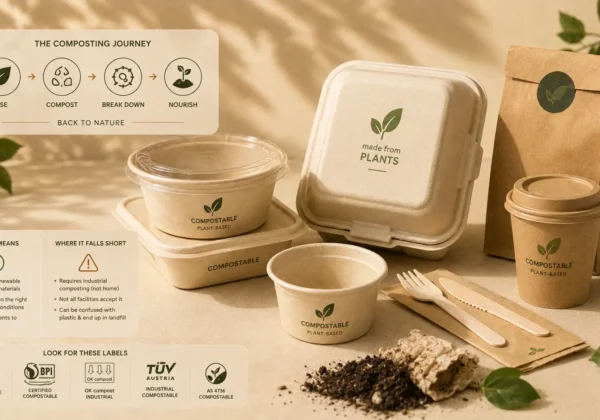
Bakery packaging has a genuine sustainability advantage over many other food categories: because many bakery products already use paper-based packaging by default, for the breathability reasons above, the shift toward compostable and lower-impact materials is often a smaller lift here than in categories built around multi-layer plastic film. That said, plastic bread bags and pastry clamshells still make up a meaningful share of the category, and compostable versions of both exist without the same barrier-performance tradeoffs seen in more demanding categories like coffee or frozen food. Our sustainable packaging guide covers the broader framework this fits inside.
Frequently Asked Questions
Should bread be packaged in paper or plastic?
It depends on intended shelf life — paper suits bread meant to be sold and eaten within a day or two, since it allows moisture to escape and reduces mold risk. Plastic suits bread with a longer intended shelf life, where moisture retention matters more.
What packaging is best for pastries?
Delicate pastries generally benefit from rigid protection, like clamshells or boxes, to prevent crushing, often combined with a window for visual presentation at point of sale.
Is bakery packaging usually custom or off-the-shelf?
Most small bakeries start with wholesale or stock packaging and move to custom options as they scale into broader retail distribution or want stronger brand presence on the shelf.
Can bakery packaging be composted?
Much of it already can be, since paper-based bakery packaging is common by default. Plastic components like bread bag closures and pastry clamshells are the parts most likely to still need a compostable alternative.